One of our favorite service opportunities here is teaching English (eikaiwa.) We teach the advanced classes in Tsuruoka and Sakata. Since last spring, we have had Mei and Echiko in our Tsuroka class. They are a mother and daughter. Mei is leaving soon to attend college in Toronto, Canada. She and her mother live about an hours' drive away, but they wanted to attend our class to prepare Mei for living in an English speaking country. They have been delightful students and both speak very good English. Mei has probably the best pronunciation of anyone we have heard.
On September 22nd, they invited the advanced class plus the elders to join them in their village- Nezugaseki for a kind of farewell party for Mei. First, they gave us a tour of the highlights of their village, then we had lunch in their favorite sushi restaurant there. We had a delightful time.
We all met at the train station, where our hosts greeted us and gave us each a "tour guide or brochure" of what we would be seeing that day- all written in English.
Our first stop was to view this important line. Running right through their village is the line between two prefectures (that is kind of like having the line between two counties or two states run right through the middle of a town in America.) So they have erected this monument and drawn the line on the road.
The line is especially significant to us as missionaries as it marks the line between our mission- the Sendai mission- and the Tokyo North mission. The elders are not supposed to ever leave the mission, so they made a big deal about getting close to the line, but not crossing over.
They even had a place where you could stamp your pamphlet, saying you had been there.
Next stop was Nezugaseki's beautiful seaport. This is me with Echiko. She is one of those people that when I met her, I felt like I had always known her.
Out on the point was this lighthouse. It was beautiful and it was an absolutely gorgeous day.
Not all of our class could attend, but there was Naomi, Echiko, Mei, Me, Elder Dance, Elder Price, and Hisako and Ken, of course- the photographer.
We then walked to the nearby open air fish market where fresh fish and seafood (just caught) were being sold.
You could even sample fresh squid, octopus, and fish, if you like.
And to think that when I came to Japan, I didn't even know what a squid looked like. Fresh calamari, anyone?
Or would you prefer fresh octopus?
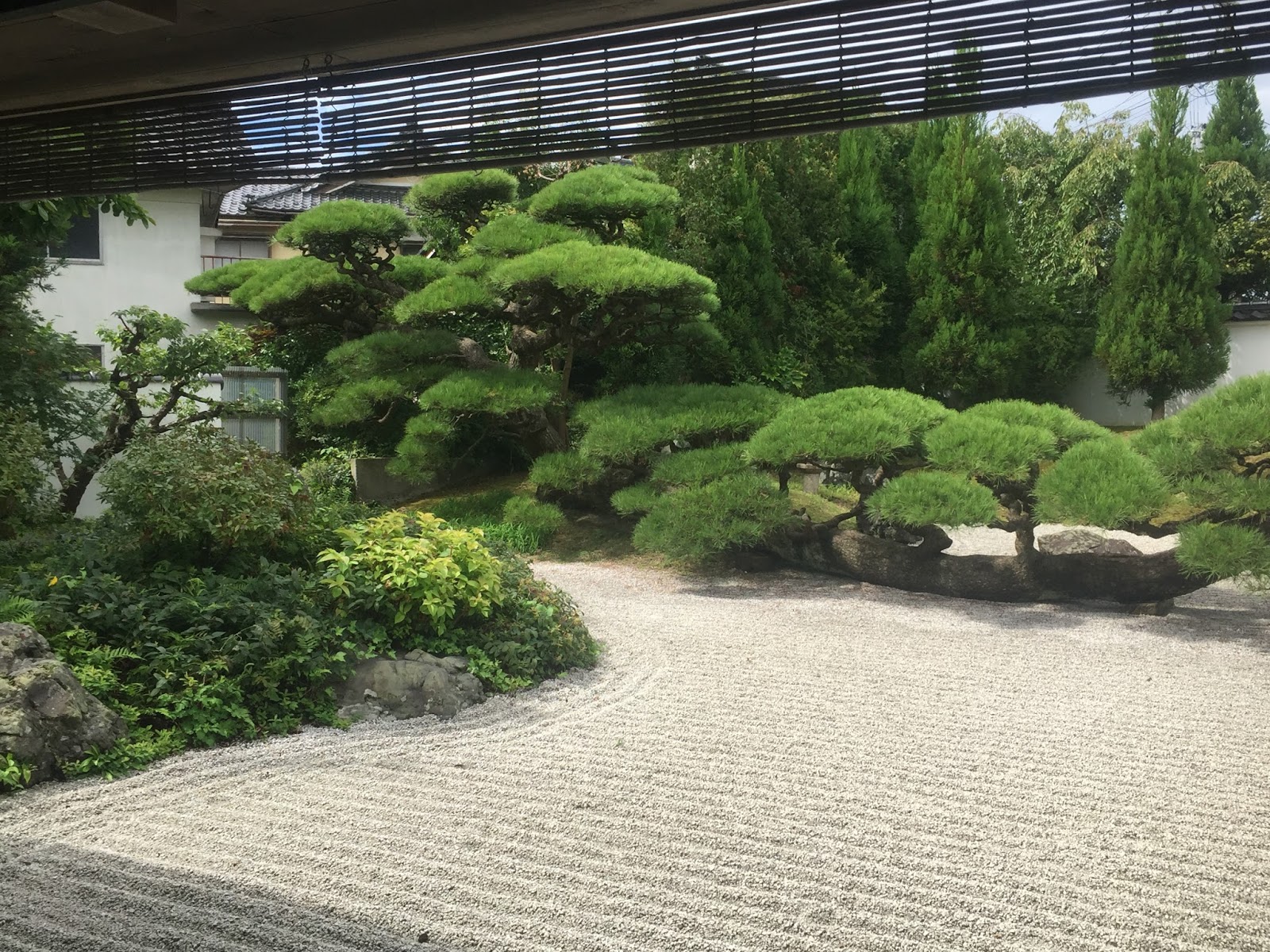
Next we visited a beautiful, little park. See the tree on the far left? 400 years ago it was tiny bonsai tree, formed by a man. It has been nurtured and groomed for over 400 years. It is now this huge and beautiful and long tree. This is a panoramic photo of it.
The gravel surrounding the tree is raked frequently to keep it looking beautiful
Serene is the word I would use to describe this beautiful park.
We thought these little berries growing there were beautiful.
Next we headed to the restaurant to have lunch. A special beautiful table was set up for us in the upstairs dining room. We removed our shoes and donned slippers set out for us. This beautiful feast was set out for us.
Mei and Echiko presented us with little gifts. Phone and purse charms are extremely popular and they let us each choose one. I liked this little cow. Mei then taught us how to fold origami balls.
Elder Hinton choosing his charm.
They had prepared this cute quiz for us- teaching us some Japanese terms for dining in Japan
This is rice covered with raw fish and seafood. There is tuna, squid, shrimp, crab, mussels, egg, fish eggs, and puffer fish. You may have heard of puffer fish. If not prepared properly, it is extremely poisonous. Sushi chefs must certify before they can serve it in their restaurants. It is very expensive and very delicious.
We also had fish soup where the fish was still on the bones- a Japanese delicacy.
The highlight of the day was when, just before we started eating, Echiko leaned over to Ken and said, "You folks are used to praying before your meals, aren't you? Would you say a prayer for us?" Though very surprised, Ken gave a beautiful prayer in Japanese. The others in the room at other tables, quieted and respectfully listened as well. It was a sweet, sweet moment.
Mei entertained us with pictures of her sailing and travel adventures.
This was the beautiful view out the window.
I found the sink and countertop in the restroom fascinating and had to snap a picture.
Here is our group with the sushi chef. As we left, he presented each of us with a beautiful cup with fish on it.
These mobiles are very popular here. I think they are beautiful.
After lunch, we asked them to drive us by their home. Echiko, like her daughter, spent time in her young adult years in Canada. She loved the style of homes there. So when her own home was built, she had it designed like a Canadian home. This probably looks like a normal home to you, but it is extremely unusual to see a home like this in Japan. And you rarely see a lawn. They just don't have lawns.
The beautiful rock work on her gate that says "Welcome" in English.
Mei and Echiko were fabulous hosts. They had planned every little detail to make it an enjoyable and comfortable experience for us. We had a delightful time with them. We are really going to miss Mei and wish her every joy and happiness life has to offer.
This is the emperor of Japan. In fact, he is the only one in the world with the title "emperor." Japan has had an emperor since like 1600 BC. He, like the royalty in England, is a Ceremonial Head of State. He is not elected, but, like the British royalty, receives his title from his father, through lineage. He, traditionally, is the head of the Shinto religion as well. His title is Ten no Heika, which means "heavenly sovereign." We address our God, or our Heavenly Father as "Ten no Otousama," so you can see how similar those are and how revered the emperor of Japan is. It is very close to worship. In fact, before World War II, it was worship. He was believed to be a God.
His name is Akihito. His father was the emperor when Japan surrendered at the end of world war II, saving thousands of life. It was his influence that led to the surrender. So, though not politically powerful, when the emperor speaks, everyone listens.
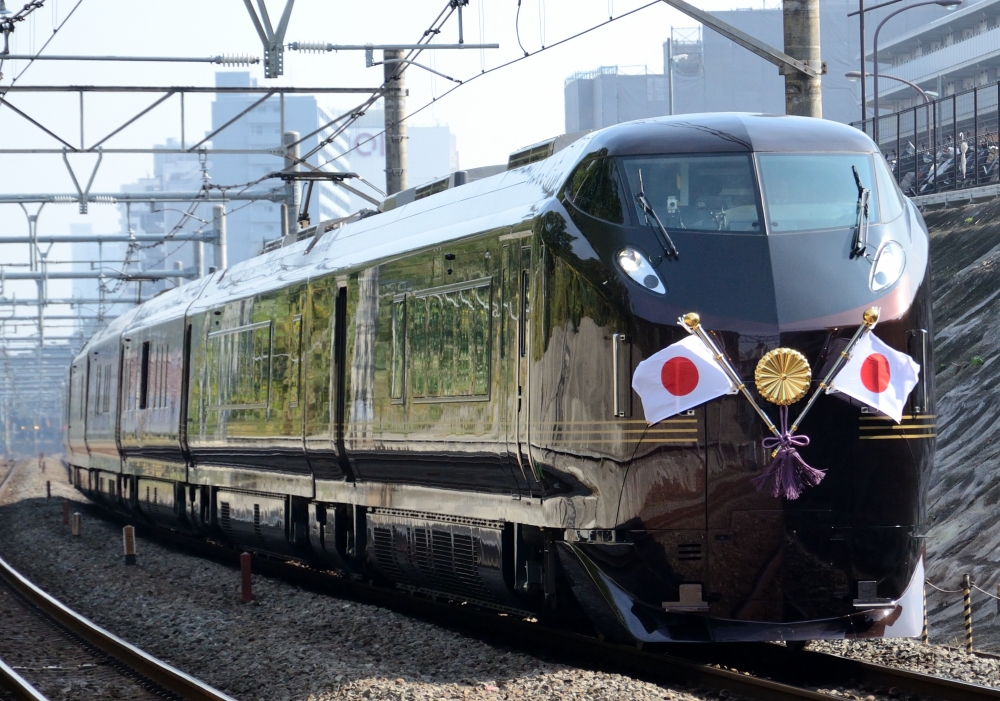
The emperor recently came to this region of Japan and stayed for three days. It was such an exciting event- a once-in- a- lifetime event for most Japanese people, and certainly for us. He came in his own special train. People lined the railroad tracks to welcome him.
The emperor's train. Kind of the equivalent of Air Force One.
Our friend from the Volunteer Center took this photo of the emperor and his wife at the hotel where they stayed in Tsuruoka.
Here she is with her photo.
For several days before he came, we saw busload after busload of what we assume were security- preparing for his visit. We joined the throngs and stood on the street to watch as his motorcade passed. We waved a Japanese flag and videoed and photographed the event.
Traveling with the emperor are many, many people, some for crowd control. This man was in charge of the area where we went (just a few blocks from our apartment.) His job was to politely keep control of the crowd. Everyone lined only one side of the street- the side on which the emperor would be seated in the car.
Elder Price, Elder Dance, and Elder Hinton waiting for the emperor.
Finally, the motorcade came, starting with car #1.
Ken's photo of the emperor and his wife.
This is the video I took as the motorcade went by:
Afterward, we went to lunch with the elders. I felt impressed that I should show the above video to our little waitress. She was so happy to see it; she even had tears. She told us that she has always wanted to see the emperor, but never has. She wanted to go to see him that day, but had to work. I asked her if she had an I-phone so I could airdrop the video to her. She said no, but it was okay. "Mune ni kizanda" she said. That means, "It is engraved in my breast." That really touched me. As we left, she thanked me again and again for sharing the video.
Elder Hinton is establishing a mission legend. The elders love to go to these all-you-can eat places and drink floats. The story keeps growing about how many he can drink. We stacked all of our glasses to make it look like he had more and sent it to elders formerly in this area- keeping his reputation alive!
It was an exciting day as Tsuruoka welcomed the emperor of Japan. We were glad he wore his "old" clothes! :-)
Our little choir recently sang for our branch conference. I had one of the branch members video our before church run through. So, it's not a perfect video, and several members that sang in it weren't there for the rehearsal, but we treasure this video. You can see Elder Hinton as he comes in after branch presidency meeting and greets people on his way up to rehearse. It is a privilege to express praise and gratitude to the Lord- no matter what language you speak!